LDPE grow bags that survive more than one season
Most grow bag complaints are the same complaint: it cracked. Thin film plus Indian sun equals brittle plastic by month five. We run 200 to 400 micron with UV stabiliser in the melt, so the bag outlasts the crop in it.
Get a grow bag quote →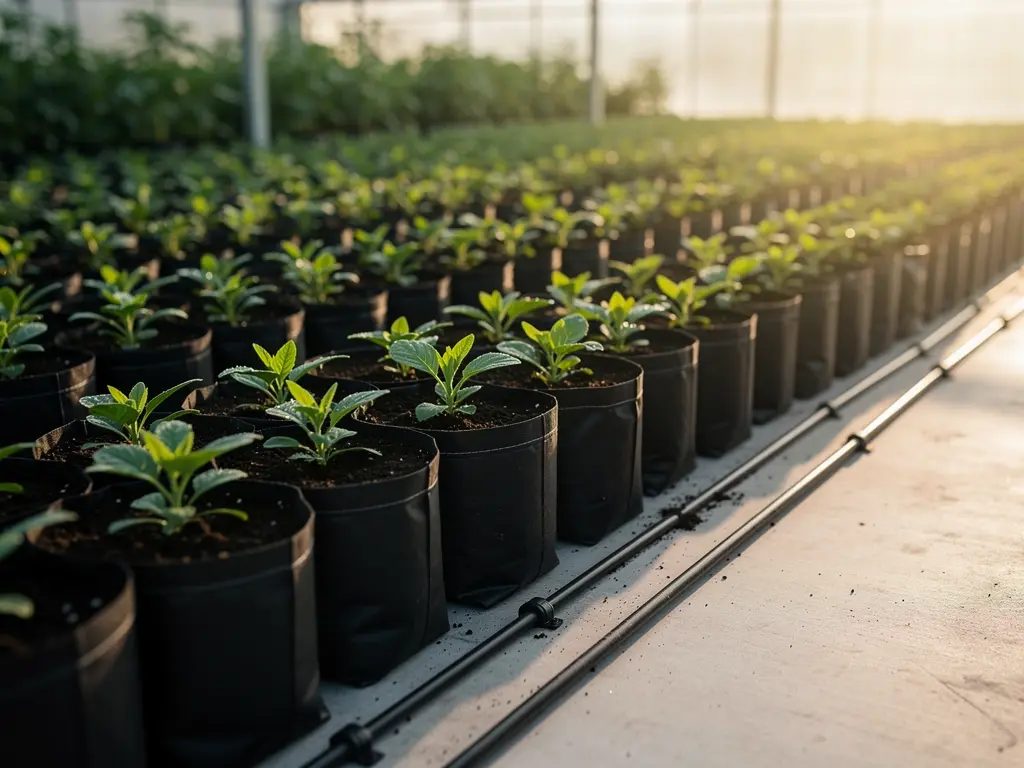
- Under 200 micron in open sun is a one-season bag. It goes brittle, then it splits at the fold.
- For 12x12 inch and smaller, 200 to 300 micron is the practical range. For 15 inch and up, go 300 to 400 micron because the soil weight is doing real work on the seams.
- UV stabiliser is not optional in India. Without it, sunlight breaks the polymer chains and the bag cracks even at 400 micron.
- Black outside blocks light so roots do not green up. White or silver outside reflects heat and keeps root-zone temperature down in Tamil Nadu and Rajasthan summers.
Grow bag specifications
A quick sanity check before you order: a 12x12 inch, 300 micron black grow bag weighs roughly 60 to 65 grams, so a 100 kg lot is about 1,550 to 1,650 bags. Work in kilos when you compare prices, not in pieces. Pieces hide the gauge. How per-kg pricing works →
Pick your size by what you are growing
Nurseries ask us this constantly, so here is the cheat sheet we give over the phone. Root volume, not plant height, decides the bag.
Why grow bags crack, and how we stop it
A grow bag fails in one of three places, and each one has a cause you can buy your way out of.
1. The sidewall goes chalky and splits
That is UV degradation. Sunlight snaps the polymer chains, the film loses flexibility, and the next time you lift the bag it tears like paper. Ordinary film in Chennai sun starts showing this in four to six months. UV-stabilised LDPE with a 24-month rating holds up for two full seasons in the same spot. The stabiliser costs a few rupees a kilo. Replacing every bag on the farm costs a lot more.
2. The base seam bursts when filled
Wet soil in a 15 inch bag is 12 to 18 kg of load hanging on one seal. If the film is thin or the seal is narrow, the seam is the weak point. We run a wider bottom seal on grow bags above 12 inch and step the gauge up to 300 micron and beyond. Flat-bottom construction spreads that load across a footprint instead of a single line.
3. Roots grow through the wall
That is a thin-film problem, not a root problem. Below 200 micron, aggressive roots on papaya or banana will find their way out. It is not a defect you can seal around: you need gauge.
That complaint describes a 100 to 150 micron bag with no UV package. It is the cheapest thing on a marketplace listing and the most expensive thing to actually use.
Grow bags versus pots: the money argument
Nurseries switch to LDPE grow bags for three reasons, and cost is only the first one.
- Cost per unit. A 12 inch plastic pot lands somewhere in the range of 25 to 60 rupees. A 12x12 inch, 300 micron grow bag is single digits in bulk. For a nursery moving 20,000 saplings a year, that gap is the difference between a profitable line and a break-even one.
- Freight. Empty bags ship flat. A 100 kg carton of grow bags takes the space of a few dozen pots. If you buy from another state, this alone can pay for the switch.
- Root health. Roots hit a hard pot wall and circle. In a fabric or film bag with proper drainage they stop at the wall instead of spiralling, so the plant transplants better. Punch placement matters here: too few holes and you get waterlogging, which is the other half of the complaints we hear.
The honest counterpoint: a grow bag is not a permanent planter. It is a two-to-three-season consumable that you replace. If you need something to sit on a balcony for ten years, buy the pot.
Related reading
Grow bag questions, answered straight
Get a grow bag quote
Send size, micron, colour and how many per month. If you tell us the crop and whether the bags sit in full sun, we will tell you the micron that actually lasts. Firm price in one working day.