Home / Resources / Properties & density

LDPE properties, and what each number means for you

Data sheets list properties without telling you which ones matter. This page gives the numbers and then says, for each one, what it changes about how you buy and use the material.

Get a spec recommendation →
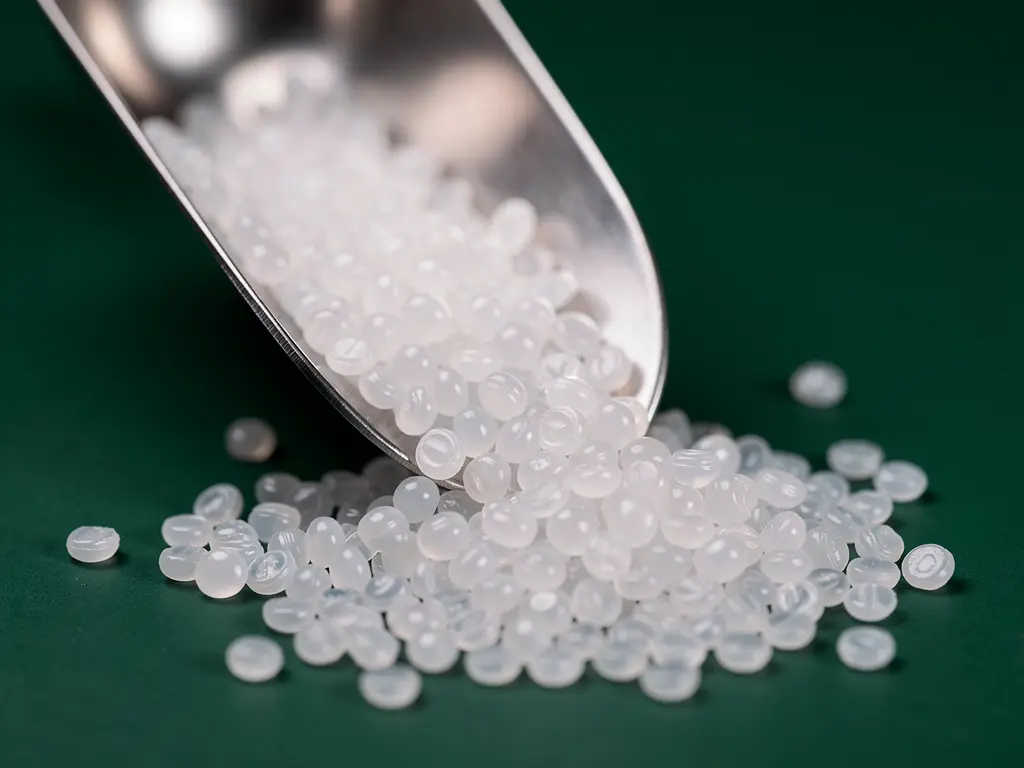
Physical and thermal properties

PropertyTypical valueWhat it means in practice
Density0.910 to 0.925 g/cm³Use 0.92 in weight calculations. This is how you convert area and micron into kilos, and therefore into money.
Melting point105 to 115 °CSeals form easily and cheaply. Also the hard ceiling: no hot fill, no boiling, no microwave.
Softening pointFrom about 100 °CBags start to lose shape before they melt. Warm-fill above 80 °C needs a conversation.
Low-temperature flexibilityTo about minus 40 °CStays flexible in a freezer instead of going brittle. This is why frozen food uses LDPE.
Water absorptionUnder 0.01 percentEffectively zero. Excellent moisture barrier, which is why it protects cement, powders and food.
Water vapour transmissionLowGood moisture barrier, which is what makes curing sheet and DPC work.
Oxygen barrierPoorDo not expect LDPE alone to extend shelf life on oxygen-sensitive food. That needs a laminate.

Mechanical and electrical properties

PropertyTypical valueWhat it means in practice
Tensile strength8 to 20 MPaLower than HDPE. LDPE compensates by stretching rather than snapping.
Elongation at break100 to 650 percentIt deforms a long way before failing. In packaging, that forgiveness is worth more than raw strength.
Tear resistanceModerate; improved by LLDPE blendingThe property most often fixed by a blend rather than by more micron.
Puncture resistanceModerate to goodSharp corners are the usual enemy. Blend or gauge up, or fix the packing method.
Shore D hardnessApproximately 45 to 55Soft. It will scuff, and it will not scratch what it wraps.
Dielectric strengthHigh, low dielectric constantWhy LDPE is used as wire and cable insulation.
Coefficient of frictionTunable with slip additivesMatters on automated lines: too grippy and bags do not separate, too slippery and stacks slide.

Chemical resistance: the useful summary

LDPE is chemically inert to most of what industry moves around, which is why it lines drums for a living.

  • Resists well: water, acids and alkalis at most concentrations, salts, alcohols, most aqueous solutions, and detergents. This covers the overwhelming majority of liner applications.
  • Handle with care: oils, fats and greases can slowly permeate. Fine for short-term packing, a problem for long-term storage of oily products.
  • Avoid: strong oxidising agents, and hydrocarbon solvents like petrol, toluene and benzene, which swell and soften LDPE. Also strong halogens.

If you are packing anything aggressive, tell us what it is before you order. The right answer is sometimes a different polymer, and it is much cheaper to hear that now than after a drum liner fails in a warehouse.

The property with no natural fix: UV

Unprotected LDPE degrades in sunlight. The polymer chains break, the film goes chalky then brittle, and the failure is irreversible. In India, expect visible degradation in four to six months of direct exposure. The fix is a UV stabiliser masterbatch, specified in months of life: 12, 24 or 36. For any product living outdoors, that additive is not optional and it should be on the quote.

Keep reading

What is LDPE?
Where these properties come from: structure and manufacture.
LDPE vs LLDPE
How blending changes the mechanical numbers above.
Micron guide
Turning these properties into a thickness you can order.

Property questions

Need a spec rather than a data sheet?

Tell us the product, the load and the environment. We will convert that into micron, blend and additive package, and then quote it.