Plastic sheet for sites that actually gets used up
Site sheet is a consumable, and buying it badly is expensive twice: once when it tears in week one, and again when a slab cures dry. We supply curing sheet, DPC and protection film in the gauges Indian specs actually call for.
Get a site quote →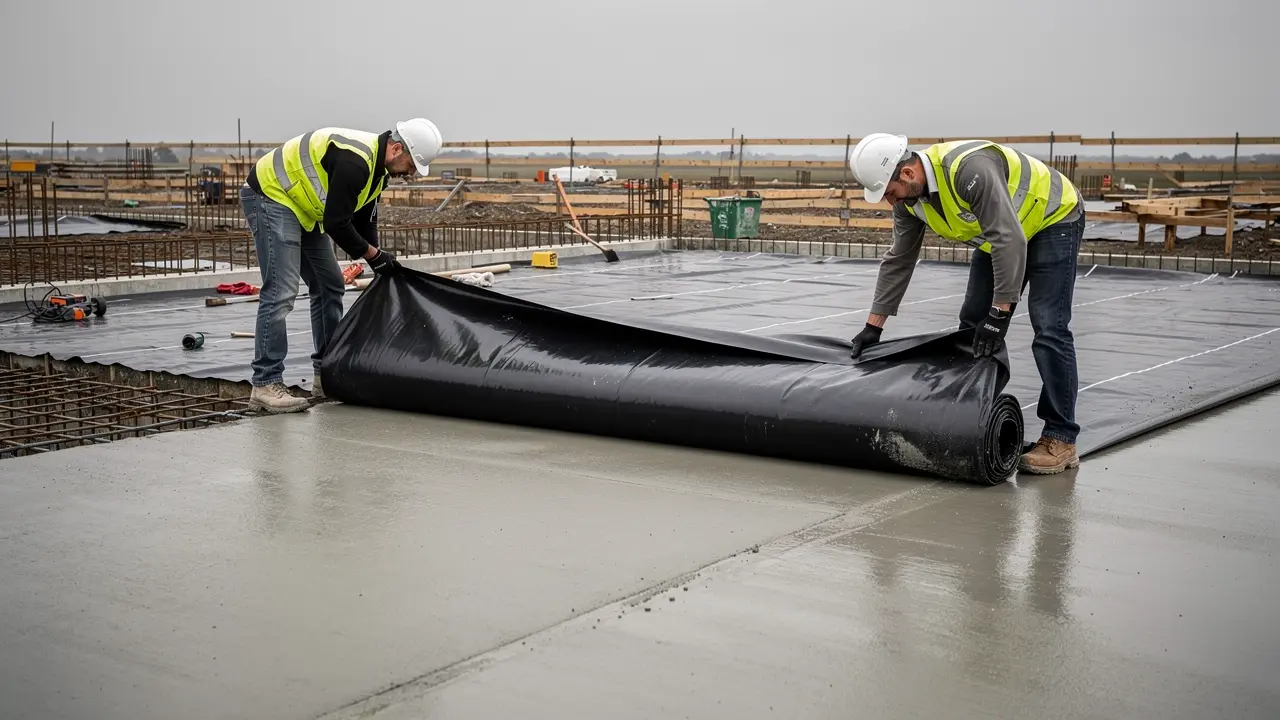
Micron by application
Add 5 to 10 percent to your area for laps before ordering. A 300 square metre slab needs about 320 square metres of sheet once you account for 200 mm overlaps.
Why curing sheet matters more than site teams think
Concrete does not dry, it hydrates. That chemical reaction needs water, and it runs for days after the pour. If the surface loses moisture too fast, the top layer never develops full strength, and you get plastic shrinkage cracks, dusting and a slab that fails a rebound test for no visible reason.
A plastic curing sheet is the cheapest moisture-retention method available. It costs a fraction of curing compound and it works passively. The failure mode is not subtle: a sheet that has torn, blown off or been walked through stops working at the tear.
Which is why our advice on site sheet is nearly always the same: go one step heavier than the minimum. The difference between 100 and 150 micron is a few thousand rupees on a slab. The difference between a cured slab and a cracked one is a great deal more.
The one job we will tell you to buy HDPE for
Permanent pond, canal and landfill lining. That is a geomembrane job and it wants HDPE, which is stiffer, stronger per unit weight and far more resistant to environmental stress cracking over decades. LDPE works as a short-term or temporary liner, and it will not last twenty years under load.
We make LDPE. We would rather tell you that than sell you a liner that fails in year three. If you need HDPE geomembrane, say so and we will point you toward it. More on the difference in LDPE vs HDPE.
What we supply construction buyers
Related reading
Construction questions
Get a quote for the site
Send the area in square metres and the application. We add the overlap allowance, pick the micron and convert to kilos. If you have a project spec sheet, send that instead and we will read it.