LDPE plastic sheet for curing, damp-proofing and covering
Site sheet gets abused. It is walked on, dragged over rebar and left in the sun for weeks. Thin sheet tears in the first week and you buy it twice. We run 100 to 200 micron so it lasts the pour.
Get a sheet quote →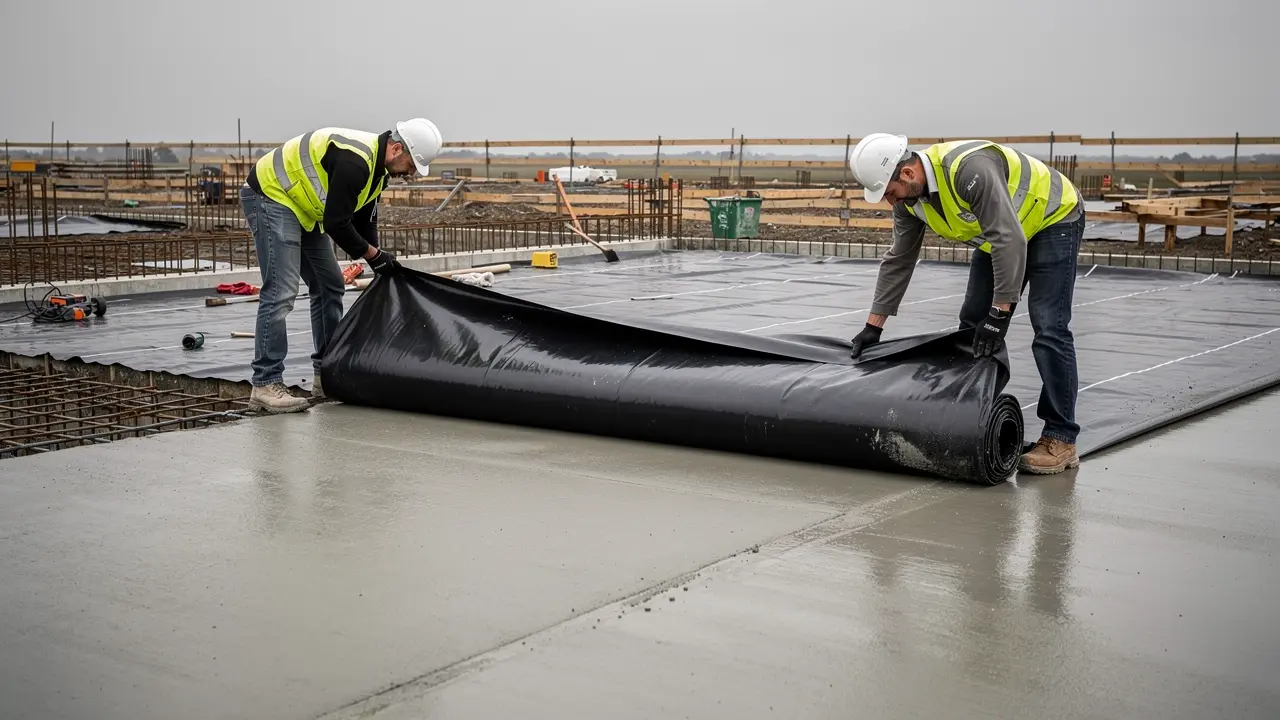
Sheet specifications
Sheet is sold by weight, and that is where quotes get slippery. Two suppliers can quote the same rupees per kilo, but if one is 15 percent thinner you get more square metres for the money and less protection per metre. Always compare micron and per-kg rate together. How to compare LDPE quotes →
Which micron for which job
This is the table we read out on the phone to site engineers three times a week.
The rule of thumb underneath all of this: cost scales with weight, and weight scales with micron. Doubling micron doubles the cost of covering the same area. So specify for the abuse the sheet will actually take, not for peace of mind.
Working out how much sheet you need
Sheet is priced per kilo but used per square metre, so here is the conversion that keeps a purchase order honest.
The formula
Weight in kg = length (m) x width (m) x thickness (mm) x 0.92
That 0.92 is the density of LDPE, roughly 0.91 to 0.925 grams per cubic centimetre. Thickness in millimetres means 200 micron is 0.2.
A worked example
You need to cover a 20 x 15 metre slab in 150 micron sheet. That is 300 square metres. 300 x 0.15 mm x 0.92 = 41.4 kg. At a hypothetical 130 rupees per kilo, the sheet for that pour costs about 5,400 rupees, or 18 rupees per square metre.
Run the same slab in 200 micron and it is 55.2 kg. Same rate, roughly 7,175 rupees. That 33 percent extra buys you a sheet that will survive being walked on and probably re-used on the next pour, which is often the cheaper decision overall.
Two things that catch people out
- Lay-flat versus open width. A tube blown at 8 ft lay-flat opens to about 16 ft. If you order "8 feet" and mean 8 feet of coverage, say so, or you will get twice what you need.
- Overlap. For curing and DPC you need 150 to 300 mm of overlap at every joint. On a big area that is 5 to 10 percent more sheet than the bare floor area. Add it before you order, not after.
Related reading
LDPE sheet questions
Get an LDPE sheet quote
Width, length, micron, black or natural, and how much per month. If you tell us the application (curing, DPC, covering, protection) we will tell you the micron that does the job without overpaying. Firm price in one working day.